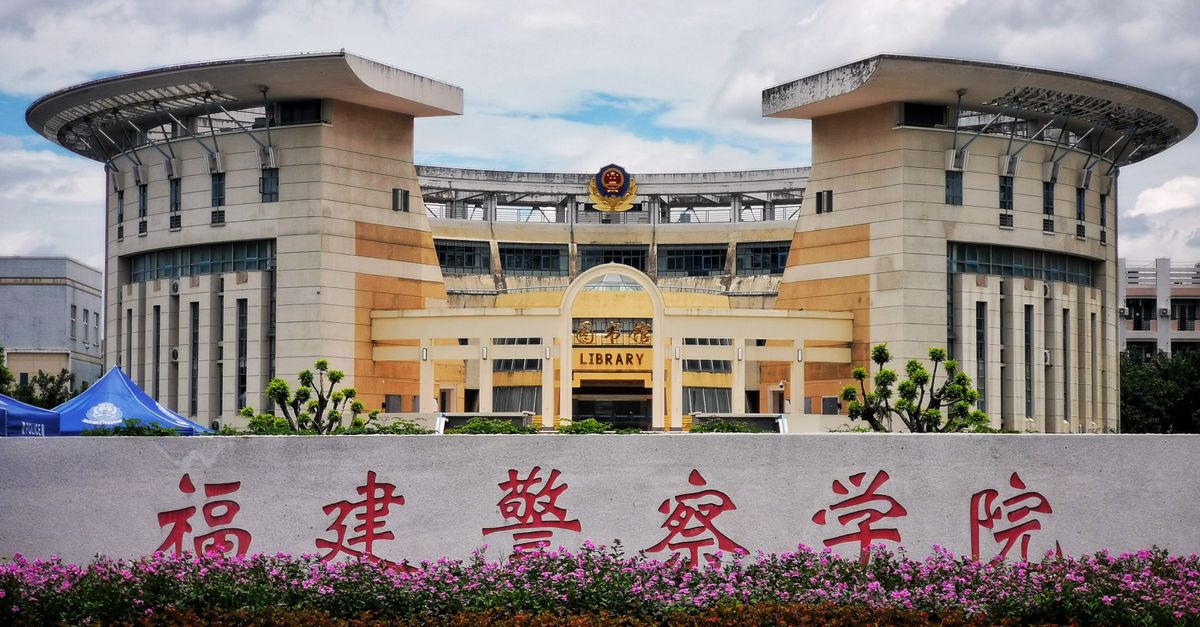
The Chinese Government Scholarship (CSC) is a fully funded award run by China's Ministry of Education through the China Scholarship Council. It waives full tuition, gives you free on-campus housing, a monthly living stipend, and basic medical insurance at more than 280 Chinese universities. Roughly 15,000 new international students win it each year, and more than 50,000 are studying on it at any given time.
That last figure tends to surprise people. The CSC is one of the largest fully funded scholarship programs anywhere, it has backed students from over 180 countries since the Council was set up in 1996, and most applicants only hear about it when a professor mentions it in passing. That is worth sitting with for a moment: a scholarship covering tens of thousands of students simultaneously, spanning nearly every country on earth, and yet the typical applicant stumbles onto it by accident — a casual comment at the end of a seminar, a line buried in a department newsletter, a friend who mentioned they were leaving for Beijing in September. The program's scale is one of its best-kept secrets, which also means the students who do find it early and prepare deliberately have a real head start over those who scramble at the last minute.
What does the Chinese Government Scholarship cover?
A full award covers tuition, on-campus accommodation, and a monthly stipend that scales with your degree: CNY 2,500 for undergraduates, CNY 3,000 for master's students, and CNY 3,500 for PhD candidates. Medical insurance runs about CNY 800 a year and is included. What it leaves out is your international airfare, visa fees, and textbooks, so budget for those yourself.
It helps to think of the coverage in two categories: the things you simply never see a bill for, and the things you need to plan around. Tuition and housing fall cleanly into the first category — you are assigned a dormitory room on campus, and your tuition is zeroed out before the semester begins. You never receive an invoice for either. The stipend, meanwhile, is a real monthly deposit you can spend however you like: food, transport within China, phone, clothing, weekend trips. At CNY 3,000 a month in a mid-tier city, that is genuinely livable. In an expensive coastal city like Shanghai or Shenzhen, you will feel it stretching thinner, but it still covers the basics if you are not eating out at Western restaurants every night. The things in the second category — airfare, visa fees, textbooks — are one-time or irregular costs rather than monthly ones, so a reasonably modest amount of savings before you depart handles most of it.
| Level | Monthly stipend | Tuition | Housing |
|---|---|---|---|
| Bachelor's | CNY 2,500 | Waived | Free, on campus |
| Master's | CNY 3,000 | Waived | Free, on campus |
| PhD | CNY 3,500 | Waived | Free, on campus |
A few flagship schools pay more. The University of Chinese Academy of Sciences gives PhD recipients CNY 5,000 a month and master's recipients CNY 3,500, on top of tuition exemptions worth up to CNY 40,000 a year. Over a three-year program, China Admissions estimates the total package can be worth more than $27,000. That UCAS figure is worth pausing on: CNY 5,000 a month for a PhD student puts you comfortably above what many entry-level white-collar workers earn in the cities surrounding those campuses. It is not a fortune, but it is enough that many students finish their degrees without touching savings from home at all, provided they are sensible about day-to-day spending.
Who qualifies, and how old is too old?
You qualify if you are a non-Chinese citizen in good health, from a country with diplomatic relations with China. The age limits are firm: under 25 for bachelor's applicants, under 35 for master's, and under 40 for PhD. Most competitive candidates carry a GPA around 3.3 on a 4.0 scale (or 80 out of 100), and graduate applicants submit two academic references from professors or associate professors.
The age limits catch people off guard more often than the GPA requirement does. A 34-year-old professional who decides to pivot into a master's program is still eligible; a 36-year-old in the same situation is not, regardless of how strong the rest of their application is. If you are anywhere near a cutoff, check the exact date against the program's enrollment start — not the application deadline — because that is the point at which the age is typically assessed. The GPA threshold, by contrast, is a floor rather than a ceiling. A 3.3 gets you over the bar, but in competitive pools at top universities a 3.7 or higher is closer to the norm among admitted students.
Competition varies more than the brochure admits. Acceptance rates run 10 to 30 percent across most participating universities, according to Global Admissions, but Tsinghua and Peking University take fewer than 10 percent of CSC applicants. China Admissions points out that Shandong University offers a similar number of slots to Tsinghua at roughly three times the acceptance rate. Where you apply matters as much as how strong you are.
Think of it this way: if you are a strong candidate, applying only to Tsinghua and Peking University is a bit like a strong tennis player entering only Grand Slams and skipping every other tournament. The prize is bigger, but so is the field, and many equally talented people are gunning for the same narrow opening. A thoughtful applicant builds a list that includes at least one or two universities where the acceptance rate is in the 20 to 30 percent range, not because those schools are a consolation prize, but because the education and research opportunities at places like Shandong, Wuhan, or Zhejiang University are genuinely excellent and the odds of actually getting to China are meaningfully better.
How do you apply, Type A or Type B?
There are two channels. Type A runs through a Chinese embassy or your home country's education ministry; Type B goes straight to a Chinese university. Embassy deadlines usually land between January and March, while university deadlines run December through April. For the 2026/2027 cycle, the U.S. embassy listed a February 14, 2026 cutoff, with results announced June to July 2026 and studies beginning that September.
The practical difference between the two channels is more than just where you send the paperwork. In a Type A application, the embassy or ministry nominates you to the CSC, which then places you at a university — you list preferences, but you do not always land where you hoped. In a Type B application, you apply directly to a specific university, and that university nominates you to the CSC. Type B gives you more control over exactly where you end up, which is one reason the pre-admission letter matters so much in that channel. When a professor or department head at your target school has already agreed to take you on, the university has every incentive to put your name forward.
Two documents do most of the work. A pre-admission letter from a professor or department at your target school raises your placement priority in the CSC system, so emailing faculty before you apply is time well spent. The study plan counts for even more: graduate research proposals should run 2,000 to 4,500 words and name specific faculty and research centers, while undergraduate study plans run 800 to 1,200. One change for 2026/2027: undergraduate applicants must now pass the new CSCA Academic Test. Master's and PhD applicants are exempt.
On the study plan specifically: the difference between a generic plan and a strong one is specificity. A generic plan says something like "I want to study environmental science in China because China is a leader in green energy." A strong plan names the lab, cites the professor's area of focus, and explains how your previous coursework or research connects to what that particular research center is doing right now. Admissions reviewers read hundreds of plans. The ones that name real people and real projects at that school stand out immediately, because they signal that the applicant has done enough homework to actually know what they are walking into.
How much Mandarin do you need to win one?
For Chinese-taught programs, master's and PhD applicants need HSK Level 4 at minimum (the HSK is China's standard Mandarin proficiency exam, graded 1 to 6), and humanities programs often ask for HSK Level 5 for direct entry without a language year. English-taught programs skip HSK entirely, though applicants whose prior schooling was not in English must show IELTS 6.0 or TOEFL 80. Take a Chinese-taught seat without the language and you will spend one to two years in preparatory classes before your degree coursework starts.
The stakes there are higher than they look. If you do not reach the required level during that prep year, the scholarship is terminated. That is not a theoretical risk — it is a real one for students who arrive banking on picking up the language through immersion alone, without structured practice beforehand. A prep year classroom moves fast, assumes you are there to consolidate and refine rather than start from zero, and conducts its own instruction entirely in Mandarin. Arriving with even a functional foundation — the ability to follow spoken instructions, read basic characters, ask for clarification — puts you in a very different position from arriving with nothing. The difference between those two students at the end of the prep year, when the proficiency assessment happens, is often the difference between continuing into the degree and being sent home.
The flip side is an easy edge: even a basic HSK Level 1 or 2 certificate can lift your ranking in a competitive Type B application, according to Study at China, in programs where no language is formally required at all. The logic is straightforward from the university's perspective: a student who has already invested time in learning Mandarin is signaling genuine commitment to being in China, not just to holding a foreign degree. That signal is cheap to send — a few months of consistent study — and it reads clearly to anyone reviewing the file.
The cheapest insurance for a Chinese-taught offer is walking in already able to hold a conversation, tones and all. That is the gap Watch Your Tones is built for: real spoken practice with feedback on every syllable, so an HSK 4 on paper matches what actually comes out of your mouth when a professor asks you a question. There is a meaningful gap between reading comprehension strong enough to pass an HSK exam and spoken fluency comfortable enough to follow a fast-moving seminar, ask a clarifying question without losing your nerve, or negotiate with a dormitory administrator who has no interest in switching to English. Closing that gap before you arrive is the kind of preparation that does not show up on the application form but makes an enormous difference in the first semester.
How fast that fluency comes once you land, and what a day of study in China actually looks like, are separate questions, each with its own post. The scholarship gets you in the door. The language is what you do once you are through it.
Frequently asked questions
How do you qualify for the Chinese government scholarship?
You must be a non-Chinese citizen in good health from a country with diplomatic relations with China, within the age limits (under 25 for bachelor's, under 35 for master's, under 40 for PhD). Most competitive applicants carry a GPA near 3.3 on a 4.0 scale (or 80 out of 100) and meet their program's language requirement: HSK Level 4 for Chinese-taught graduate study, or IELTS 6.0 / TOEFL 80 for English-taught programs.
How can I get a full scholarship to study in China?
The CSC is the main route to fully funded study, applied either through a Chinese embassy or education ministry (Type A) or directly to a Chinese university (Type B). A pre-admission letter from a professor at your target university significantly raises your placement priority, and a strong, specific study plan or research proposal is one of the most decisive parts of the file.
How to apply for Chinese government scholarship 2026-2027?
Choose Type A (embassy or ministry) or Type B (university) and submit by the deadline; embassy deadlines run January to March (the U.S. embassy listed February 14, 2026), and university deadlines run December to April. You submit a study plan, two academic references, transcripts, and a language certificate, and for 2026/2027 undergraduate applicants must also pass the new CSCA Academic Test. Results are announced June to July 2026, with studies starting that September.
What is the stipend for Chinese government scholarship?
The monthly living stipend is CNY 2,500 for undergraduates, CNY 3,000 for master's students, and CNY 3,500 for PhD candidates, alongside waived tuition and free on-campus housing. Some institutions pay more, with the University of Chinese Academy of Sciences giving PhD recipients CNY 5,000 a month.
Sources reviewed
- Chinese Government Scholarship 2026/2027 — U.S. Embassy of the People's Republic of China
- CSC Scholarship 2026-2027: Complete Guide — Global Admissions
- China Scholarships — The 2027 Guide for International Students (China Admissions)
- Chinese Government Scholarship (CSC) 2026 — immi.legal
- Call for 2026 Chinese Government Scholarship — University of Chinese Academy of Sciences (UCAS)
- CSC Scholarship 2026: Complete Application Guide — Went China
- How to Apply to the CSC Scholarship Step by Step — China Admissions
- Chinese Government Scholarship — CSC Scholarship Council
- The China Scholarship Council: An Overview — CSET, Georgetown University
- Chinese Government Scholarship Eligibility, Documents & More — Amber Student